

Oswalds Mill Audio
Horn loudspeakers, triode amplification, and acoustic design rooted in cinema heritage, so music becomes the event, not the background.
Schedule a Listening SessionThe Power & Beauty of Sound
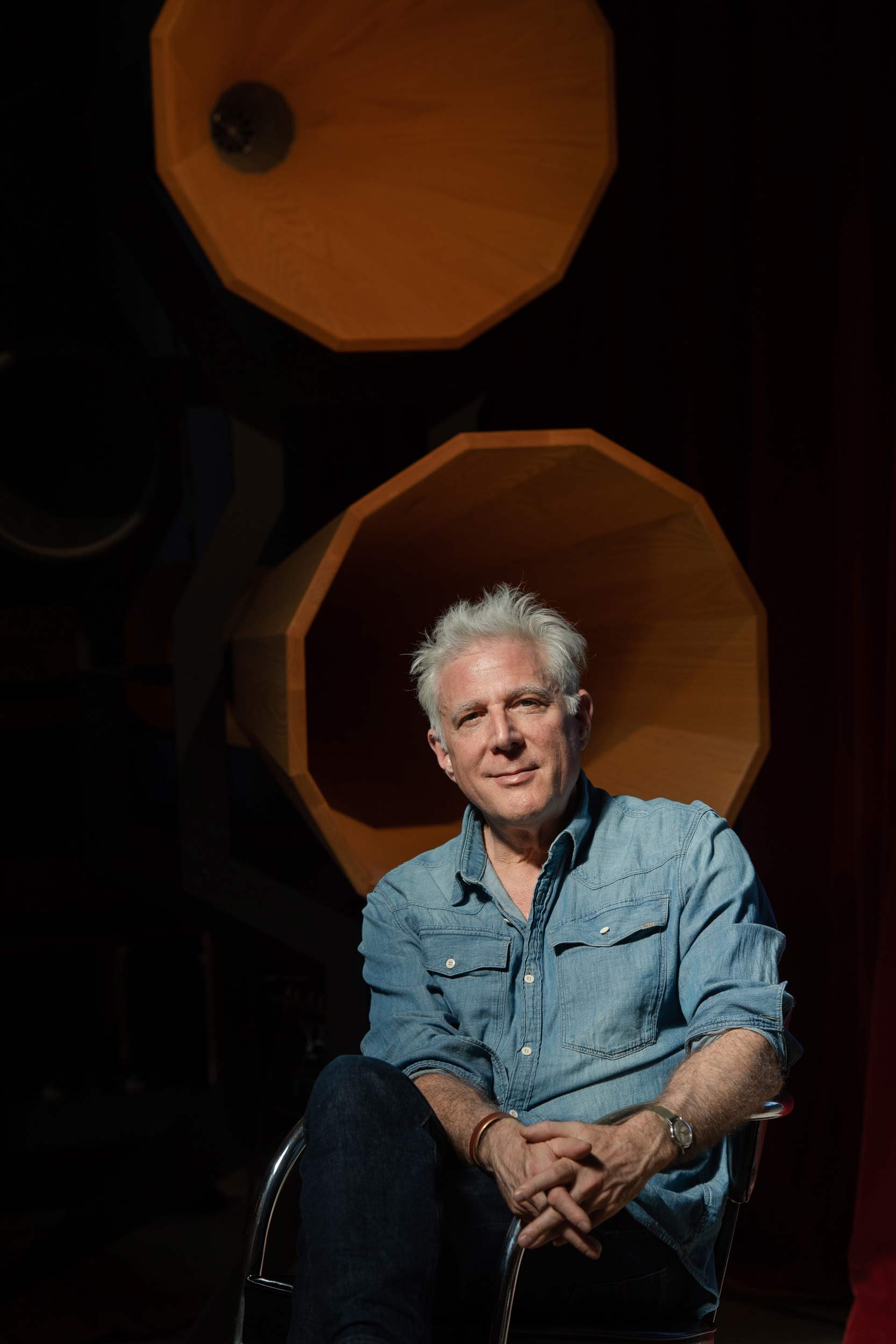
Oswalds Mill Audio (OMA) was founded to recover a quality of sound many listeners have never heard, drawing on the cinema speaker systems and triode vacuum-tube amplifiers of the 1930s, updated for today’s homes and hospitality spaces. Under Jonathan Weiss, a collective of horn designers, tube engineers, turntable artisans, and industrial designers has reoriented high-end audio toward a model long forgotten: efficiency, musicality, and objects built to last generations.
OMA products look different because they are different, in ways you hear, not just see. With an OMA system, music is no longer just a soundtrack. Stereo Types helps clients audition, specify, and integrate OMA loudspeakers, electronics, turntables, and room treatments into listening rooms and great rooms where design and performance share equal billing.
Horn Technology, Hand-Built in Pennsylvania
OMA’s loudspeakers use conical and exponential horns, cast bronze throats, solid hardwood cabinets, and professional drivers chosen for low distortion and high efficiency. The result is startling dynamics from modest amplifier power, especially with triode tube amplification, where OMA’s Special K and related designs excel.
From the flagship AC1 , the loudspeaker that started it all, to the compact Mini and the Guggenheim-commissioned Museum Speaker , every OMA model is a statement piece engineered for serious listening. We pair them with source components, room acoustics, and, when appropriate, Fleetwood Sound speakers for more compact applications in the same aesthetic family.
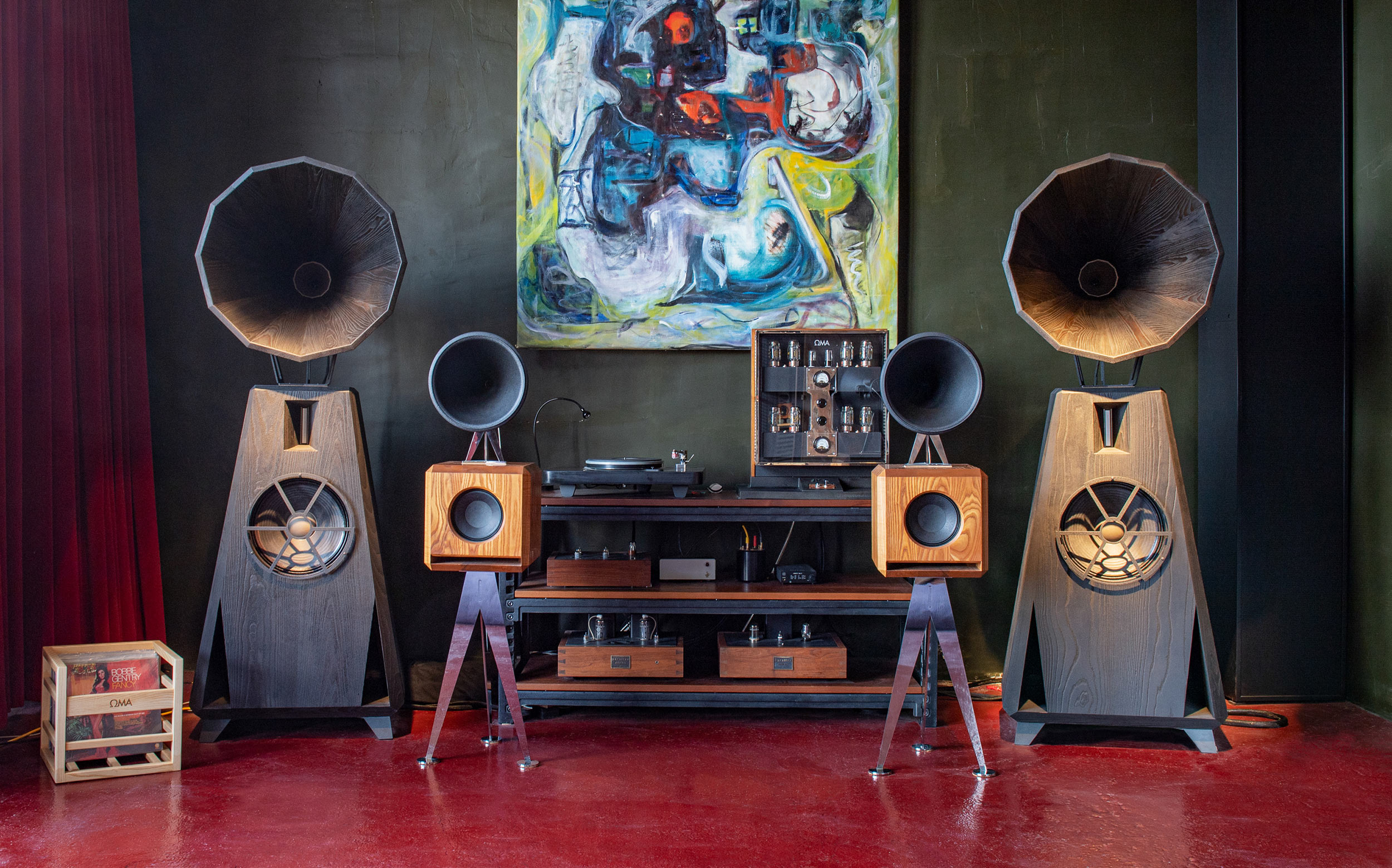
The OMA Collection
Loudspeakers, amplification, analog playback, acoustic treatments, and furniture: each category reflects OMA’s “form follows function” ethos.
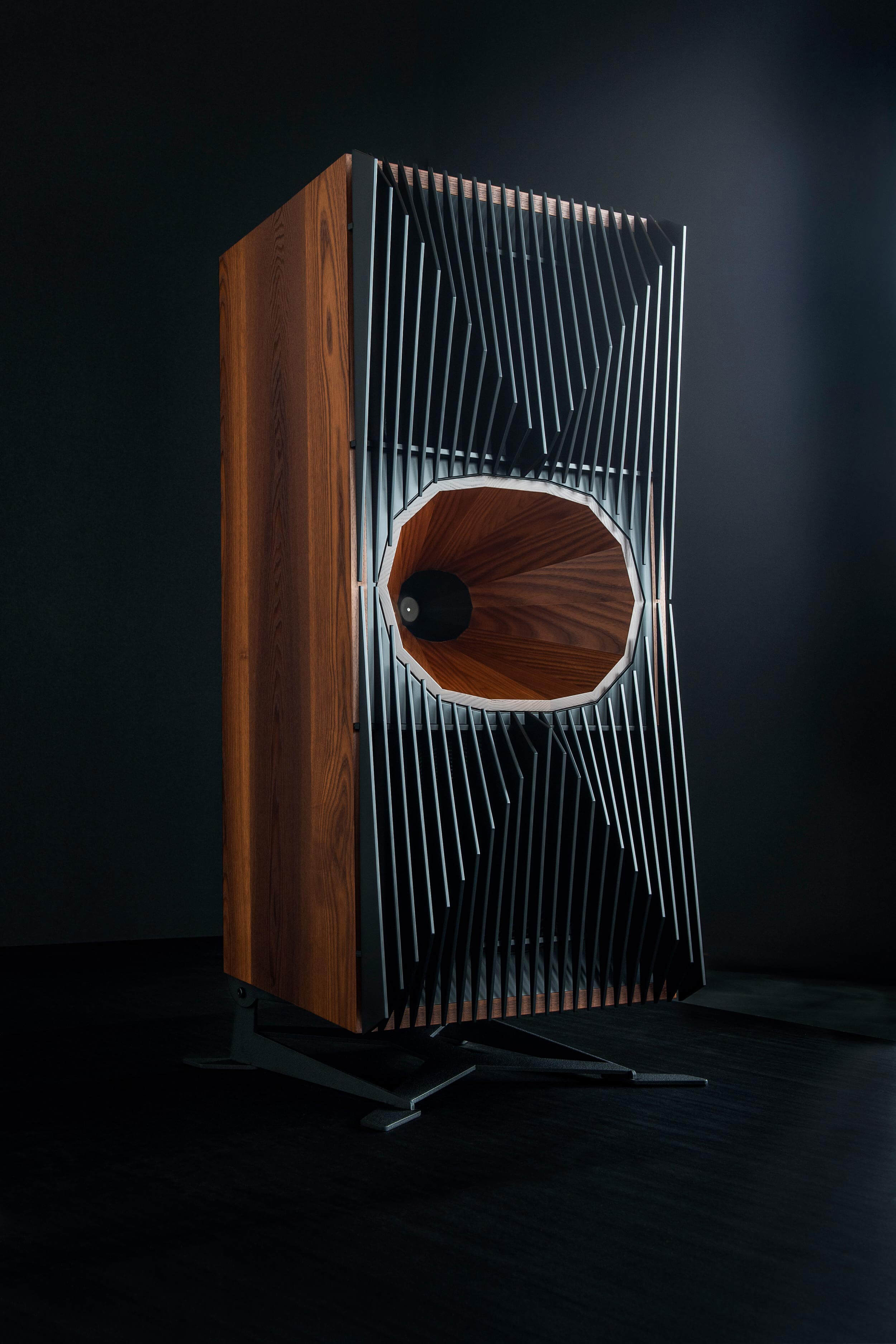
Museum Speaker
Created for the Guggenheim Museum of Art and featured in the exhibition Anthem , a sculptural horn loudspeaker that proves audio can be fine art.
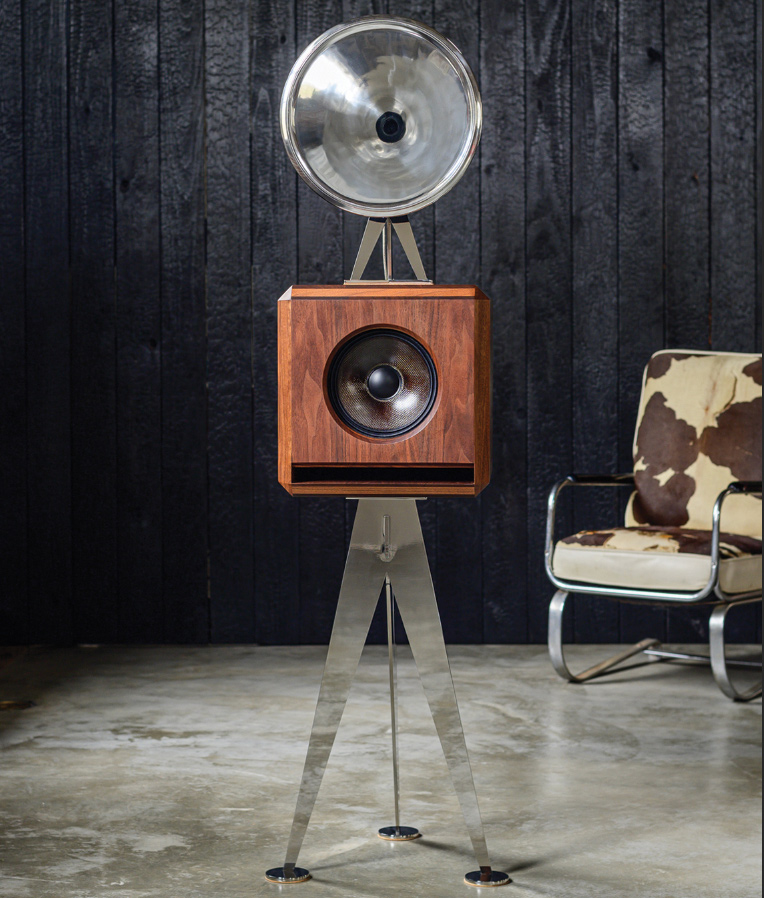
Mini
Polished aluminum horns with black lacquer: compact horn loading for rooms where scale matters but compromise on musical impact does not.

AC1
The loudspeaker that started it all: Pennsylvania walnut, copper stands, and cast bronze horn throats, the reference OMA statement system.
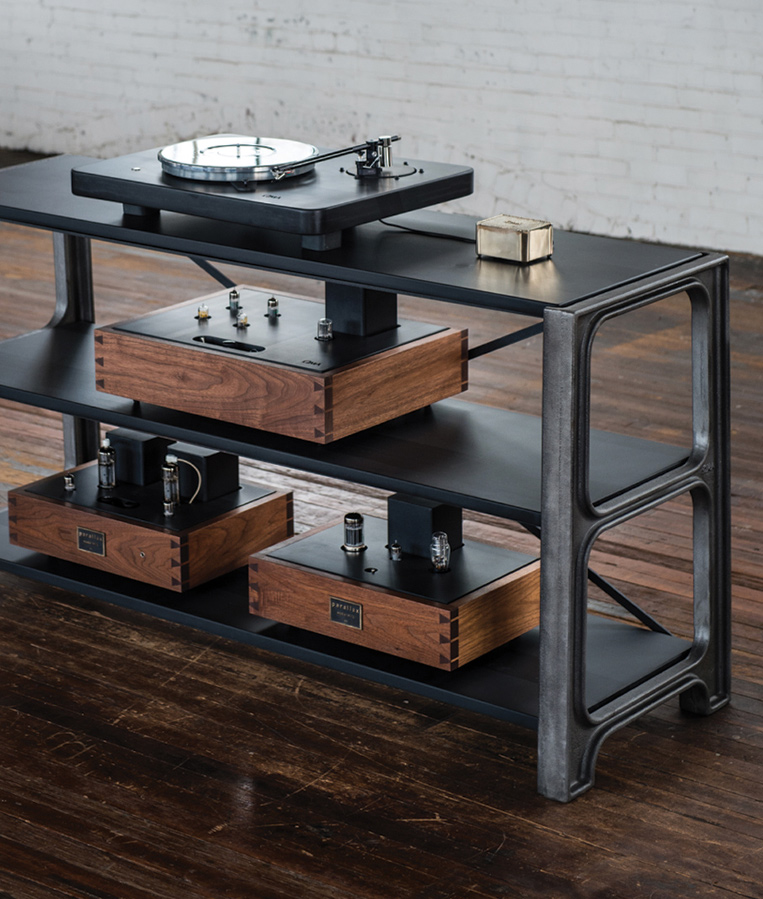
Special K
Triode tube amplification designed to mate with OMA’s high-efficiency horns, where a few watts deliver concert-level presence and texture.
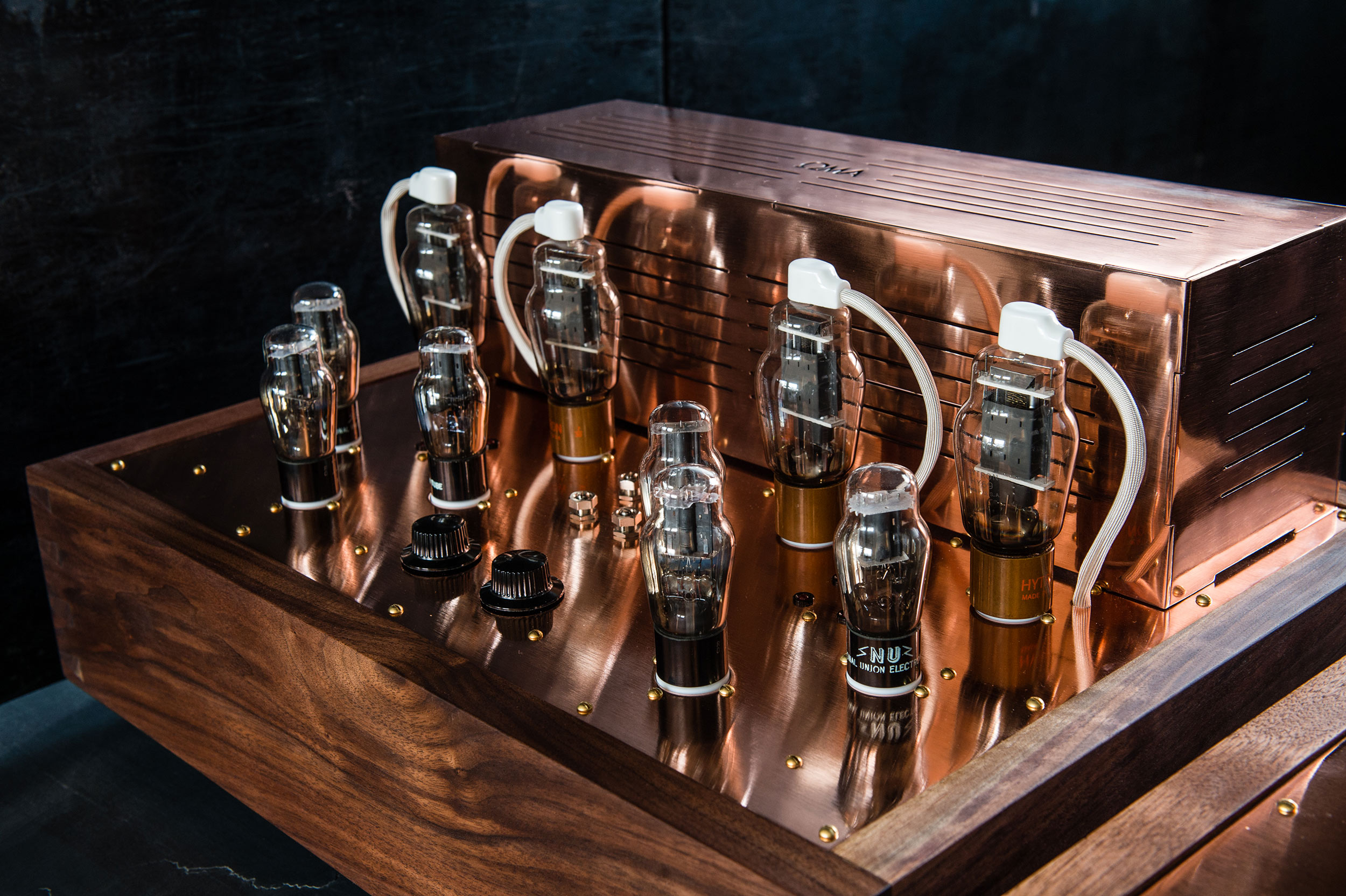
Black Knight
A dramatic horn loudspeaker with copper and lacquer finishes, with visual drama matched by the scale and authority of horn-loaded sound.
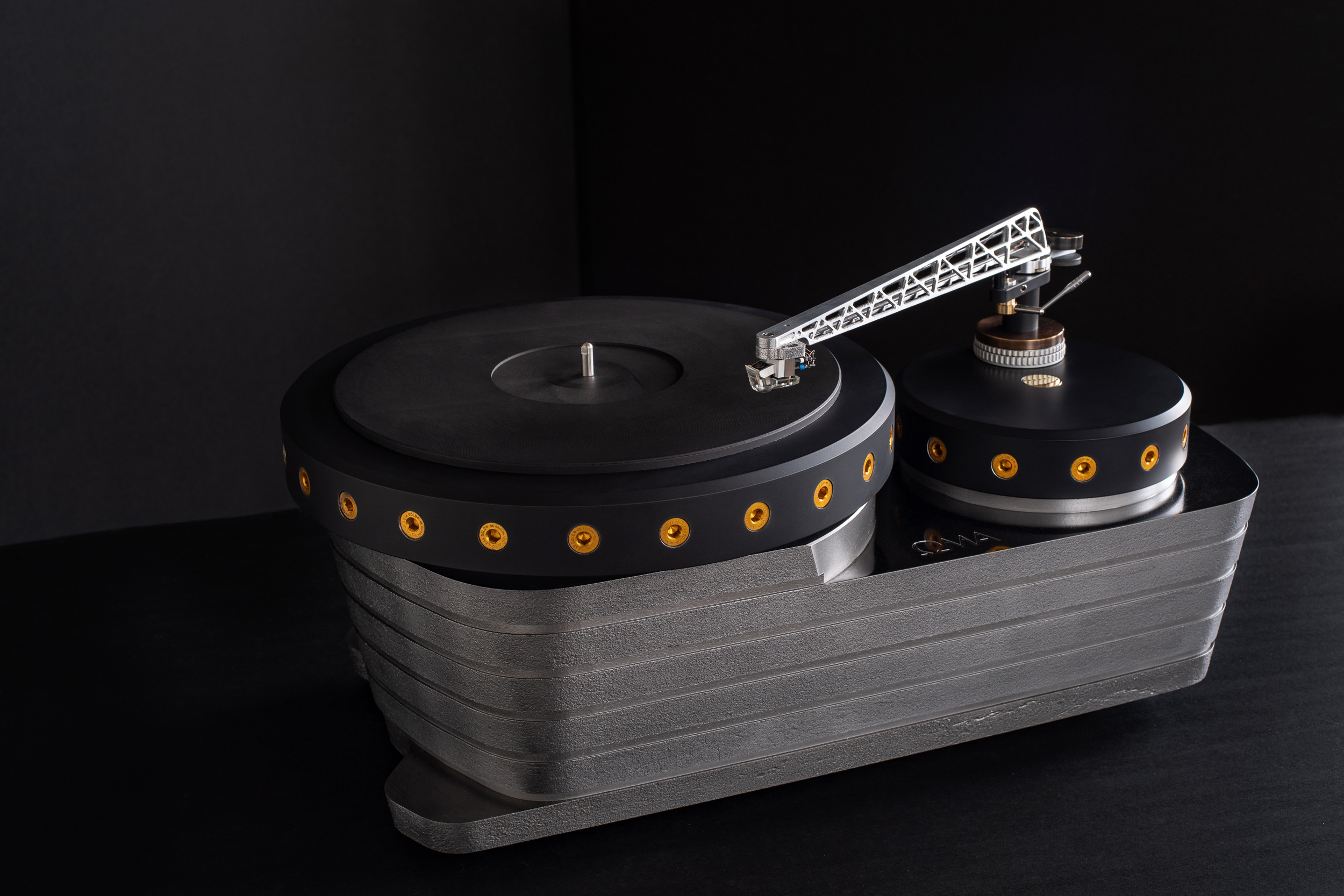
K3 Turntable
An exercise in “form follows function”: precision analog playback engineered as thoughtfully as OMA’s loudspeaker systems.
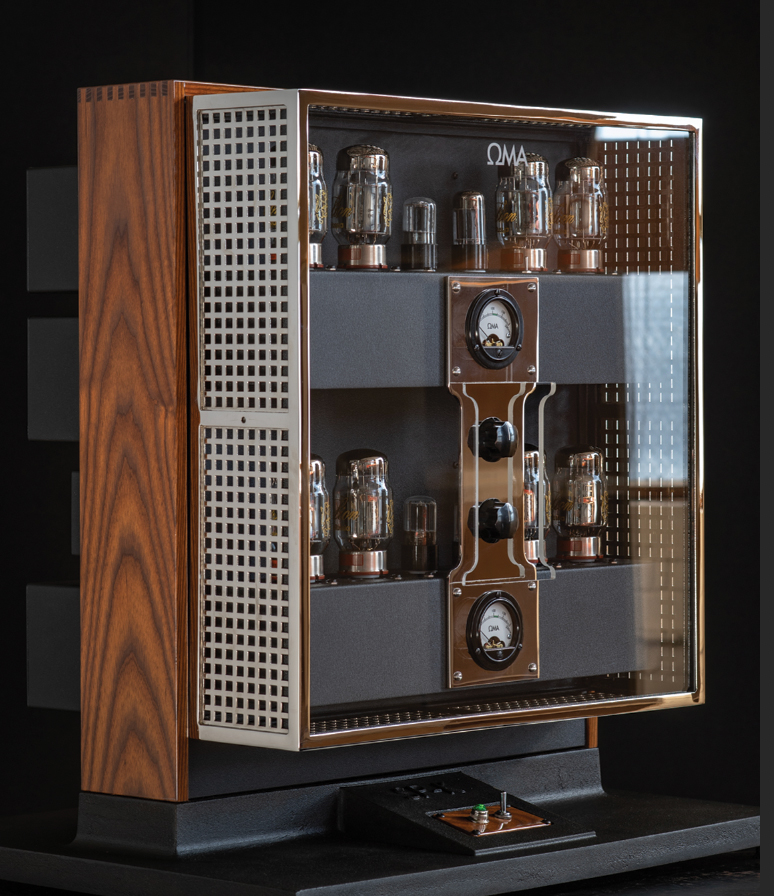
D1 Diffusor
Acoustic treatments tailored to your room, interior décor, and listening preferences, because the room is part of the system.
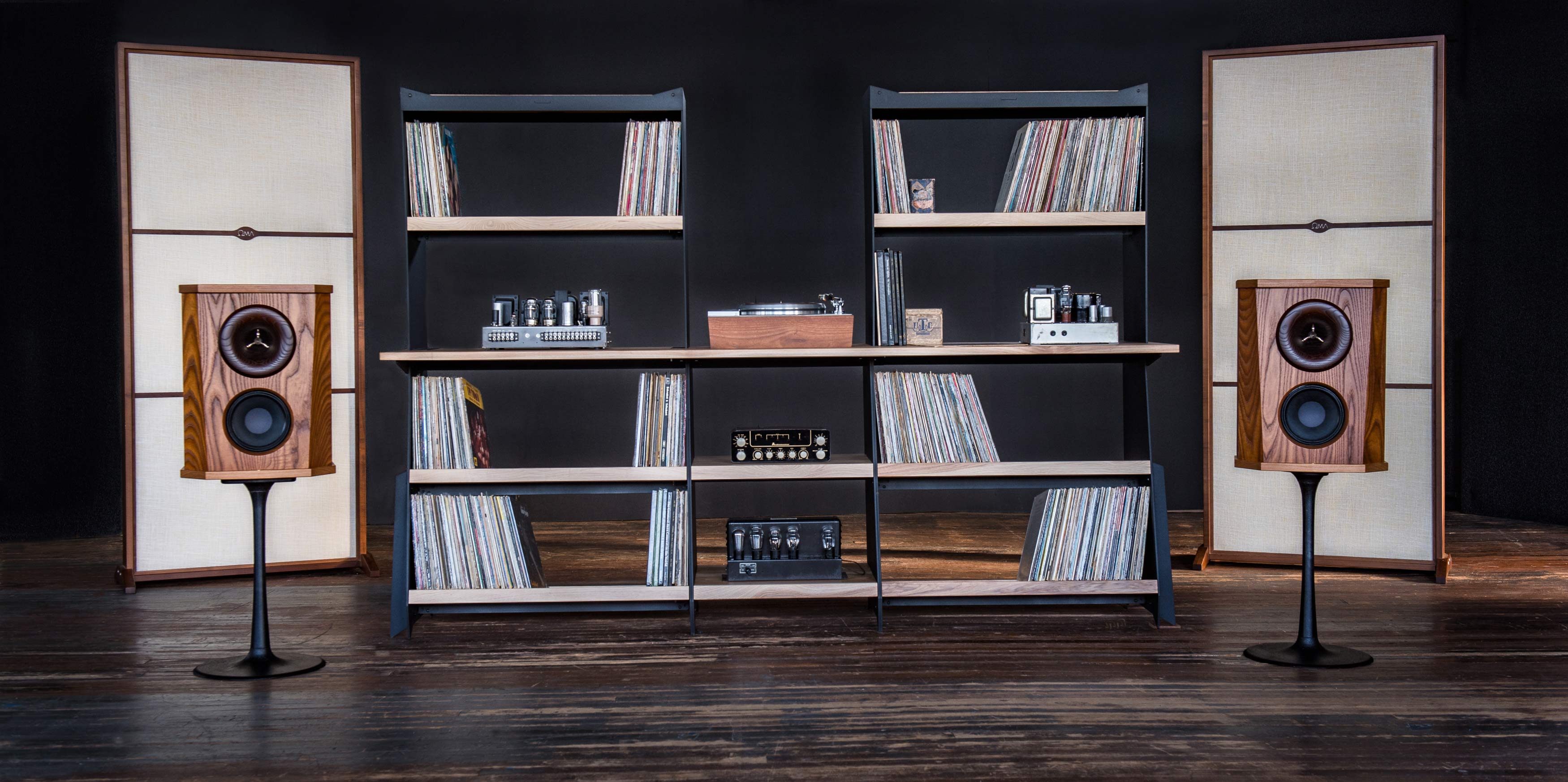
Equipment Rack
Modular audio furniture with cast iron stands and slate shelves: rack systems as intentional as the electronics they support.
What Sets OMA Apart
A philosophy of sound built on efficiency, craftsmanship, and the conviction that music deserves foreground attention.
Horn-Loaded Efficiency
OMA horns couple drivers to the room with far greater efficiency than conventional box speakers, yielding lower distortion, higher dynamics, and lifelike scale from modest amplifier power.
Artisan Build Quality
Solid hardwoods, cast bronze, hand-rubbed oil and wax finishes, and Pennsylvania craftsmanship. These are components meant to be lived with for decades and passed on.
Triode & Analog Soul
OMA’s amplification and turntable designs honor the warmth and immediacy of triode tubes and vinyl, paired with modern engineering where it serves the music.
Design as Statement
OMA loudspeakers are sculptural centerpieces. We help clients place them in rooms where architecture, furniture, and sound reinforce one another, not compete.
Listening Rooms & Hospitality
OMA systems suit dedicated Hi-Fi listening rooms , architect-designed great rooms, and hospitality venues where sound quality is part of the brand experience. We coordinate speaker placement, electrical, rack location, and acoustic treatment, including OMA D1 diffusors, so the system performs as intended on day one.
For clients who love the OMA ethos but need a more compact footprint, explore our Fleetwood Sound page. OMA’s sister division is built in the same Pennsylvania factory with the same hardwoods, horns, and engineering DNA.
Why Choose Stereo Types for OMA
Curated Auditions
We guide listening sessions so you hear what horn efficiency and triode amplification actually deliver, not just specifications on paper.
Room & System Design
Speaker placement, acoustics, power, and source matching, planned around your room’s dimensions, décor, and how you listen.
Thoughtful Integration
OMA can anchor a pure two-channel room or complement a wider home, without forcing you into generic “smart home” compromises.
Long-Term Partnership
From specification through installation and support, we stay with systems built to last, just like OMA’s own products.
Frequently Asked Questions
OMA uses horn-loaded designs and extreme efficiency (often 100 dB or more at 1 watt), so small triode amplifiers can drive large-scale sound with low distortion. Cabinets are solid hardwood with cast metal horn throats, built by hand in Pennsylvania. The goal is musical presence and dynamics reminiscent of golden-age cinema systems, not the “background music” experience many modern speakers deliver.
Not necessarily. Models like the Mini and Museum Speaker are designed for real residential spaces. Because horns are efficient, they often work well at moderate listening levels. We’ll match the model to your room volume, seating, and aesthetic goals during consultation.
Fleetwood Sound Company is a division of OMA: smaller, more affordable loudspeakers built in the same factory with the same solid hardwoods, conical horns, and hand-finished details. Many clients start with Fleetwood DeVille or Helios and later add OMA flagship systems to a dedicated listening space.
Yes. Horn systems reveal room behavior clearly, so treatment matters. We specify OMA D1 diffusors and broader acoustic strategies as part of the project, especially in reflective modern architecture or open-plan living spaces.
Florida / Southeast
Virginia / Mid Atlantic
Colorado / Utah / Montana

Social Media
Stereo Types:

Mid Atlantic:

South East:

North East:
