What Determines the Cost of a Custom AV System
It is the first question almost every homeowner asks: how much will this cost? It is a fair question, and it deserves a clear answer. But a custom AV system is not a product you take off a shelf. It is built around your home, your rooms, and the way you actually live in them.
That is why two projects on the same street can carry very different price tags. At Stereo Types, we think you should understand what drives those numbers long before you sign anything. Here is an honest look at the factors that shape the cost of a custom AV system.
Why There Is No Standard Price List
A custom system is designed, not ordered. Every home has its own layout, its own materials, and its own goals. One family wants a dedicated theater with tiered seating. Another wants music in every room and nothing visible on the walls. Those are two very different projects, even if the budget starts in the same place.
Think of it like a kitchen remodel. The final number depends on size, finish, and complexity. AV works the same way. The good news is that the cost is not random. It comes from a handful of clear drivers, and you can control most of them.
The Size and Layout of Your Home
Scope is the biggest single driver. More rooms mean more speakers, more screens, more cable, and more hours on site. But layout matters just as much as square footage.
Number of rooms. Every zone you add brings its own equipment and its own labor.
Ceiling height and room shape. Tall or open spaces need more power to fill with even sound.
Wall materials. Concrete, brick, and stone are far harder to run cable through than drywall.
Distance from the equipment rack. Long cable runs cost more and sometimes need signal extenders.
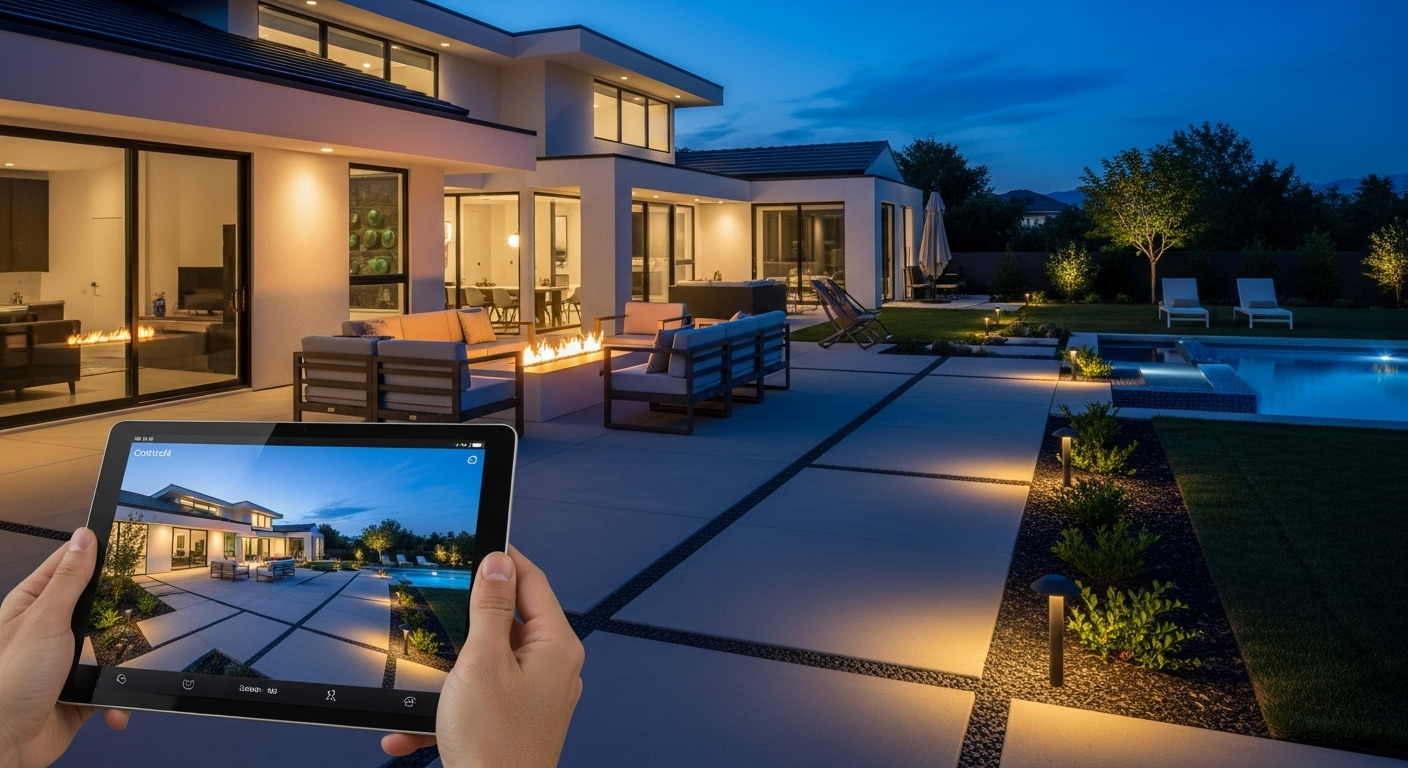
Outdoor areas. Patios and pool decks need weather-rated gear, which costs more than indoor equipment.
The Equipment You Choose
Hardware is the part most people picture, and it does carry real weight in the budget. But the range inside each category is very wide.
Speakers and Amplifiers
A neat pair of in-ceiling speakers and a modest amplifier will serve a kitchen beautifully. A reference-grade theater with height channels and a dedicated subwoofer array sits at a different level entirely. Both choices are valid. The right one depends on how you really listen.
Displays and Projectors
A quality flat panel is affordable today. A large-format laser projector paired with an acoustically transparent screen is not. Screen size, brightness, and mounting hardware all move the number, and so does the wall you plan to put it on.
Control and Automation
A single-room remote is one price. A whole-home platform such as Control4, tying together audio, video, lighting, shades, and climate, is another. Automation adds real convenience, and it also adds processors, keypads, and programming time.
The most expensive system is rarely the best one. The best one is the system that matches how you live — and that is a design decision long before it is a purchase.
Wiring and Infrastructure
This is the part clients see least and value most later. Cable, conduit, racks, network switches, and power management are not glamorous. They are what decide whether your system runs quietly for ten years or frustrates you within two.
Good infrastructure also protects your budget. Pulling a spare cable during construction costs very little. Opening a finished wall two years later costs a great deal.
Do Not Overlook the Network
Almost everything in a modern AV system depends on the home network. Streaming, control apps, voice commands, and cameras all share the same connection. A basic router from your internet provider is rarely enough for a large home.
A properly sized network with business-grade access points and a managed switch is a genuine line item on the quote. It is also one of the best investments you can make. When the network is solid, the whole system feels instant. When it is weak, even excellent equipment feels slow and unreliable.
Design, Programming, and Calibration
A custom system includes many hours you never see on a spec sheet. Someone has to model the acoustics, plan the rack, write the control code, and tune the finished result.
Discovery. We learn how you use each room and what matters most to you.
System design. Drawings, equipment lists, and coordination with your builder or designer.
Installation. Rough-in during construction, then trim work and final placement.
Programming. Building the interface so one button does exactly what you expect.
Calibration. Measuring and adjusting sound and picture inside the finished room.
These stages are where a good integrator earns their keep. They are also the reason a professional install of the same equipment will outperform a do-it-yourself version.
New Build or Retrofit?
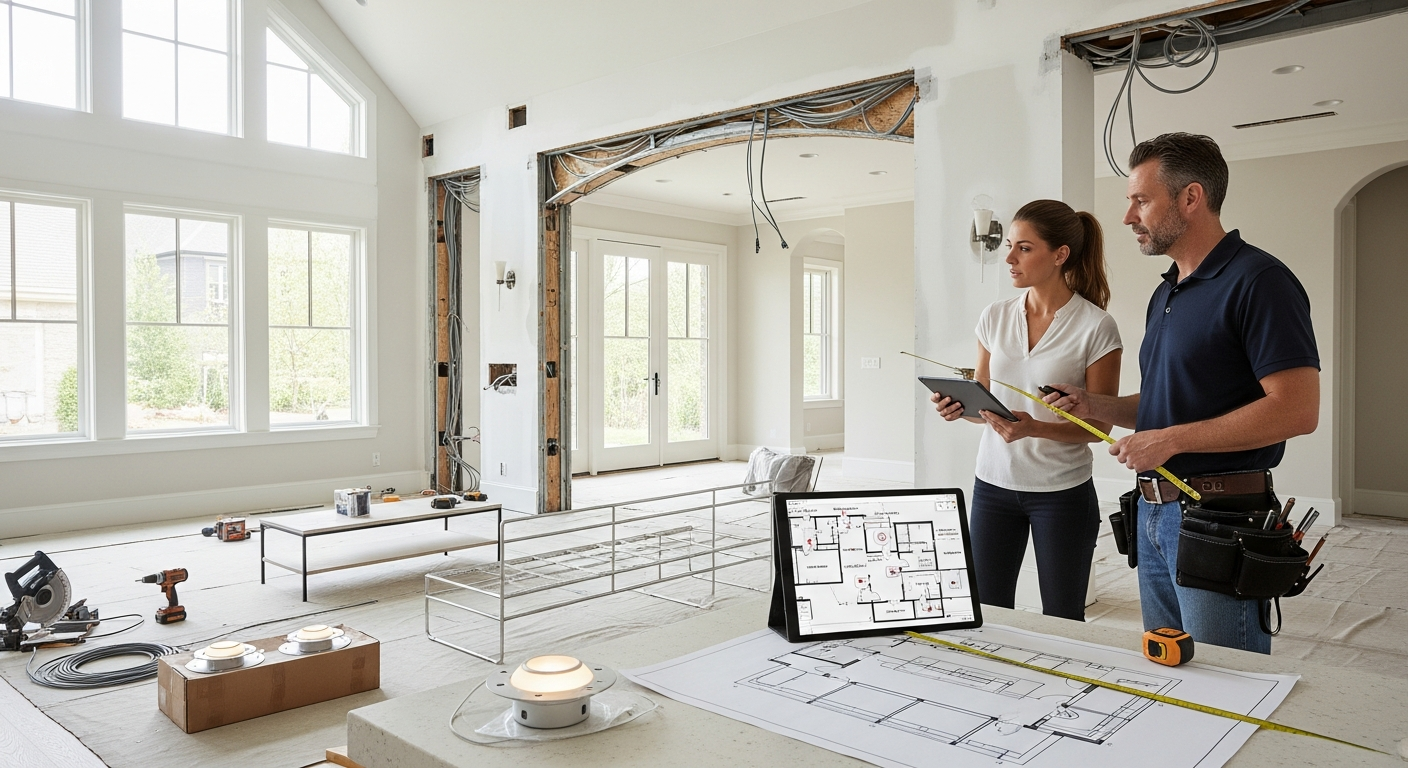
Timing has a real effect on price. If we are involved before the drywall goes up, we can place wiring exactly where it belongs. That is fast, clean, and efficient.
A retrofit in a finished home takes far more care. We fish cable through existing walls, patch neatly, and work around finishes you have already paid for. The result can be just as good, but the labor is higher. If you are planning a renovation, bring your AV team in early. It is the easiest way to save money on the whole project.
Support After the Install
Your system is not finished on handover day. Firmware updates, new streaming services, and changing habits all need attention. Many homeowners choose a service plan for remote monitoring and priority response. It is a modest ongoing cost that quietly prevents much larger ones.
Practical Ways to Manage Your Budget
You do not have to do everything at once. A well-designed system can grow with you, year by year.
Prewire generously, buy gradually. Run cable to rooms you may use later, even if you leave them empty for now.
Prioritize the rooms you use daily. The living room and primary suite usually give the best return.
Invest in the parts that last. Speakers and wiring stay for decades. Source devices are easy to swap.
Be honest about your habits. Pay for performance you will genuinely notice and enjoy.
Ask for a phased plan. A clear roadmap keeps each stage affordable and predictable.
How to Read a Quote
A trustworthy proposal is specific. It should name the equipment, describe the labor, and explain clearly what is not included. Vague numbers early on often turn into surprises later. When you compare quotes, compare the scope first and the price second. A cheaper bid that skips wiring, programming, or calibration is not really cheaper at all.
Let Us Talk About Your Project
The cost of a custom AV system comes down to four things: scope, quality, complexity, and timing. Once you understand those levers, the number stops feeling mysterious and starts feeling like a set of choices you control.
Every home we work on begins with a conversation, not a price list. Contact Stereo Types today, and we will help you shape a system that fits your home, your habits, and your budget.