Why Do Some Rooms Sound Better Than Others?
You have probably noticed it before. The same speakers that sound rich and detailed in one room can sound thin, boomy, or harsh in another. Nothing about the equipment has changed — only the space around it. At Stereo Types, we design luxury audio, video, and automation systems for residences, penthouses, mega yachts, and executive spaces, and one lesson repeats itself on every project: the room is as important as the gear inside it.
Here is what actually happens to sound after it leaves a speaker, and why some rooms simply sound better than others.
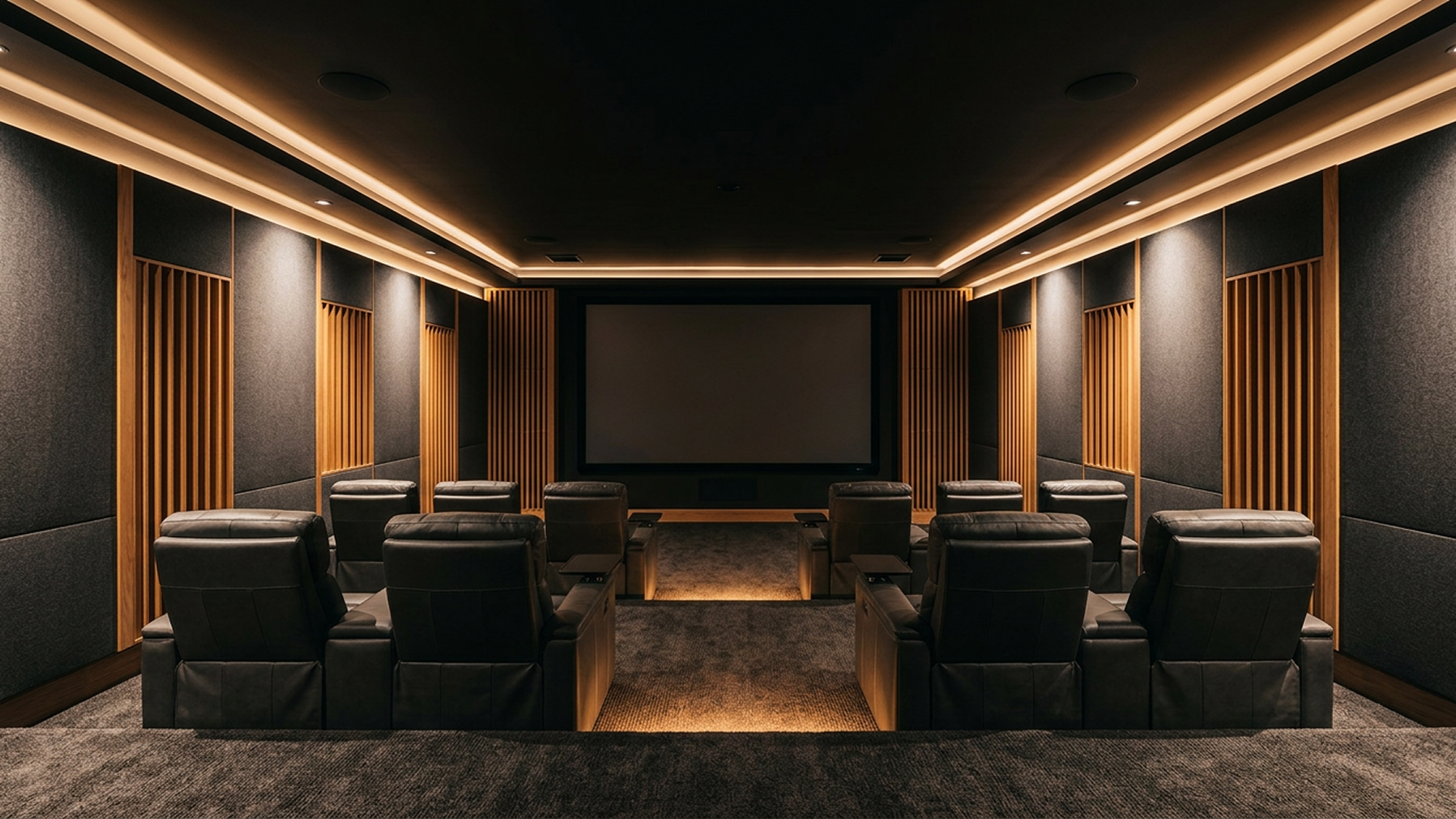
The Room Is Part of the Sound System
When a speaker plays, only a small part of what you hear travels straight to your ears. That is the direct sound. Everything else bounces off walls, floors, ceilings, glass, and furniture before it reaches you. In a typical living room, reflected energy can easily outweigh direct energy at the listening position.
This means the room is not a neutral container. It is an active component that colours tone, blurs detail, and shapes how wide or deep the soundstage feels. A well-designed room lets good speakers perform at their best. A poor one holds them back, no matter how much the equipment costs.
How Hard and Soft Surfaces Change What You Hear
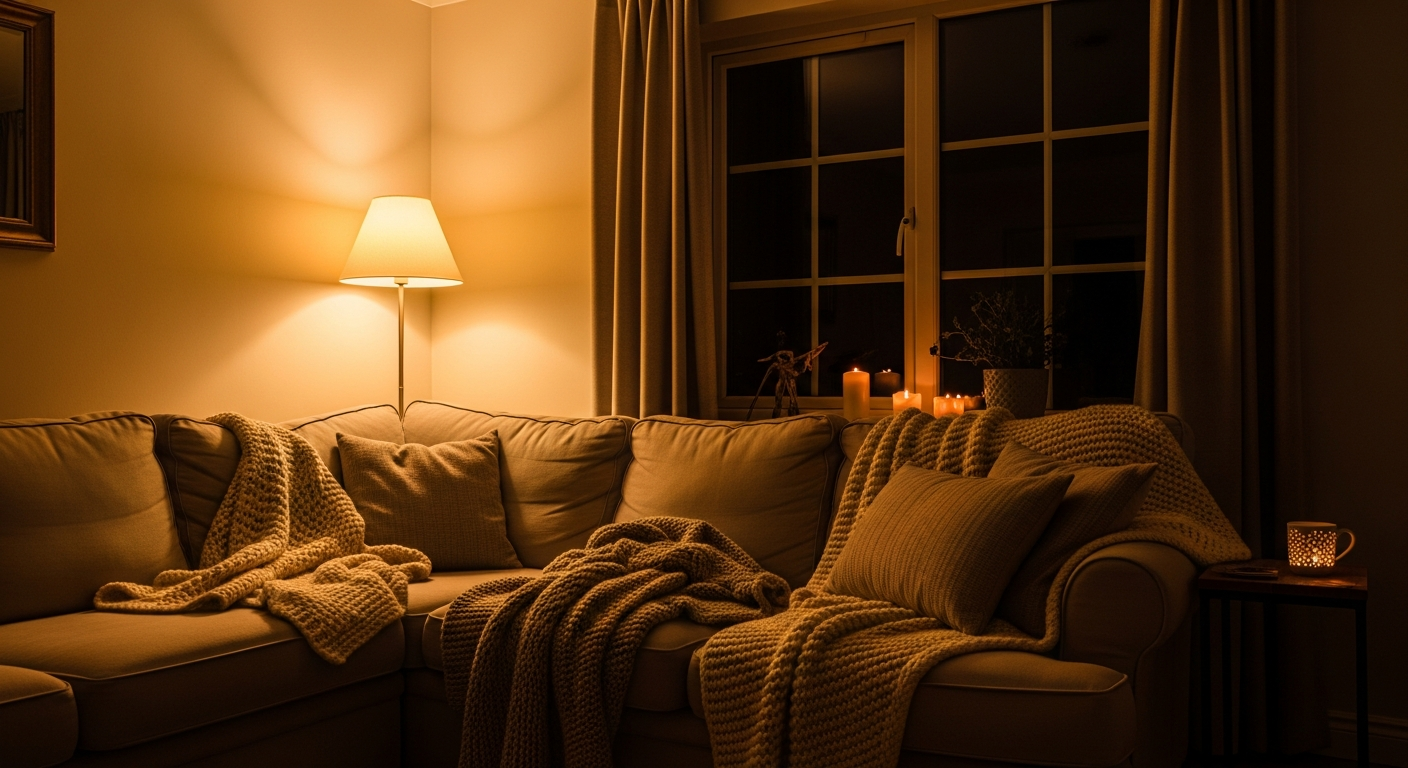
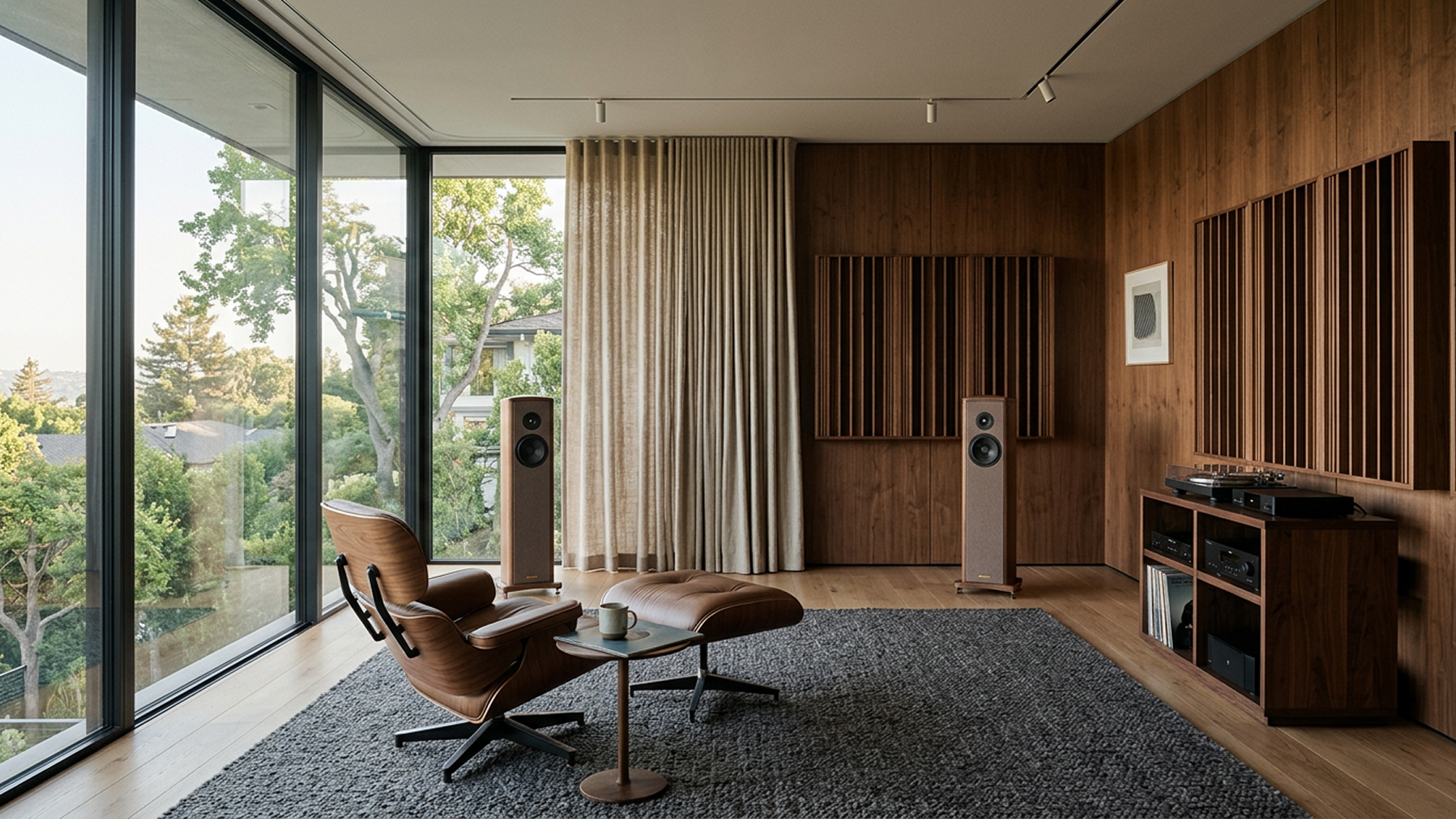
Materials decide how much sound energy comes back into the room. Hard, dense surfaces — glass, tile, marble, concrete, and bare drywall — reflect almost all of the sound that hits them. Soft, porous materials such as heavy curtains, wool rugs, upholstered seating, and acoustic panels absorb a portion of it, especially in the mid and high frequencies.
That is why a modern room with floor-to-ceiling glass and polished stone often sounds bright and echoey, while a room with rugs, drapery, and soft furniture sounds calmer and more controlled. Neither extreme is ideal. The goal is balance, not silence.
Reverberation Time and Why It Matters
Acousticians measure how long sound lingers in a space using reverberation time, often written as RT60 — the time it takes for a sound to fade by 60 decibels after the source stops. A cathedral may have several seconds of reverberation. A recording studio may have less than half a second.
For home listening rooms and dedicated cinemas, a short and even reverberation time, generally in the range of about 0.3 to 0.5 seconds, produces clear dialogue and tight bass. Longer reverberation smears detail: film dialogue becomes harder to follow, and fast music loses its rhythm. Shorter is not always better either, because an over-treated room can feel unnaturally dead.
Room Shape, Size, and the Problem of Standing Waves
Low frequencies behave very differently from high ones. Bass wavelengths are long — a 50 Hz tone is roughly 6.9 metres (about 22.5 feet) long — so they interact directly with the dimensions of the room itself. When a wavelength fits neatly between two parallel surfaces, the reflections reinforce each other and create a standing wave, also called a room mode.
The result is uneven bass. In one seat a note sounds overwhelming; a metre away the same note almost disappears. Cube-shaped rooms and rooms where the length, width, and height are simple multiples of each other suffer the most, because their modes stack on top of one another. Rooms with well-chosen proportions spread those modes out and sound far more even.
Parallel hard walls create another artefact: flutter echo, the rapid metallic ringing you hear when you clap your hands in an empty hallway.
Early Reflections and Stereo Imaging
Reflections that arrive very shortly after the direct sound are the ones your ears struggle to separate. Instead of hearing them as echoes, your brain merges them with the original sound. This changes tone and softens the precise sense of where instruments and voices are placed.
The main culprits are the side walls, ceiling, and floor points between the speakers and the listener. Treating or breaking up these first reflection points is one of the most effective improvements available in any room. Symmetry matters here too: if the left speaker sits beside a glass wall and the right one sits beside an open hallway, the stereo image will pull to one side.
Where Your Speakers and Seats Sit
Placement costs nothing and often delivers the biggest gains. Moving a speaker closer to a wall increases bass output, but reflections from that boundary can also cancel specific low frequencies at the listening position. Corners exaggerate bass the most, which is why subwoofers behave so differently depending on where they stand.
Seating position is just as important. Sitting exactly halfway along the length of a room places you in a null for certain modal frequencies, so bass sounds weak there even when the system is capable. Small adjustments to seats and speakers frequently solve problems that no amount of equipment can fix.
Absorption, Diffusion, and Finding the Balance
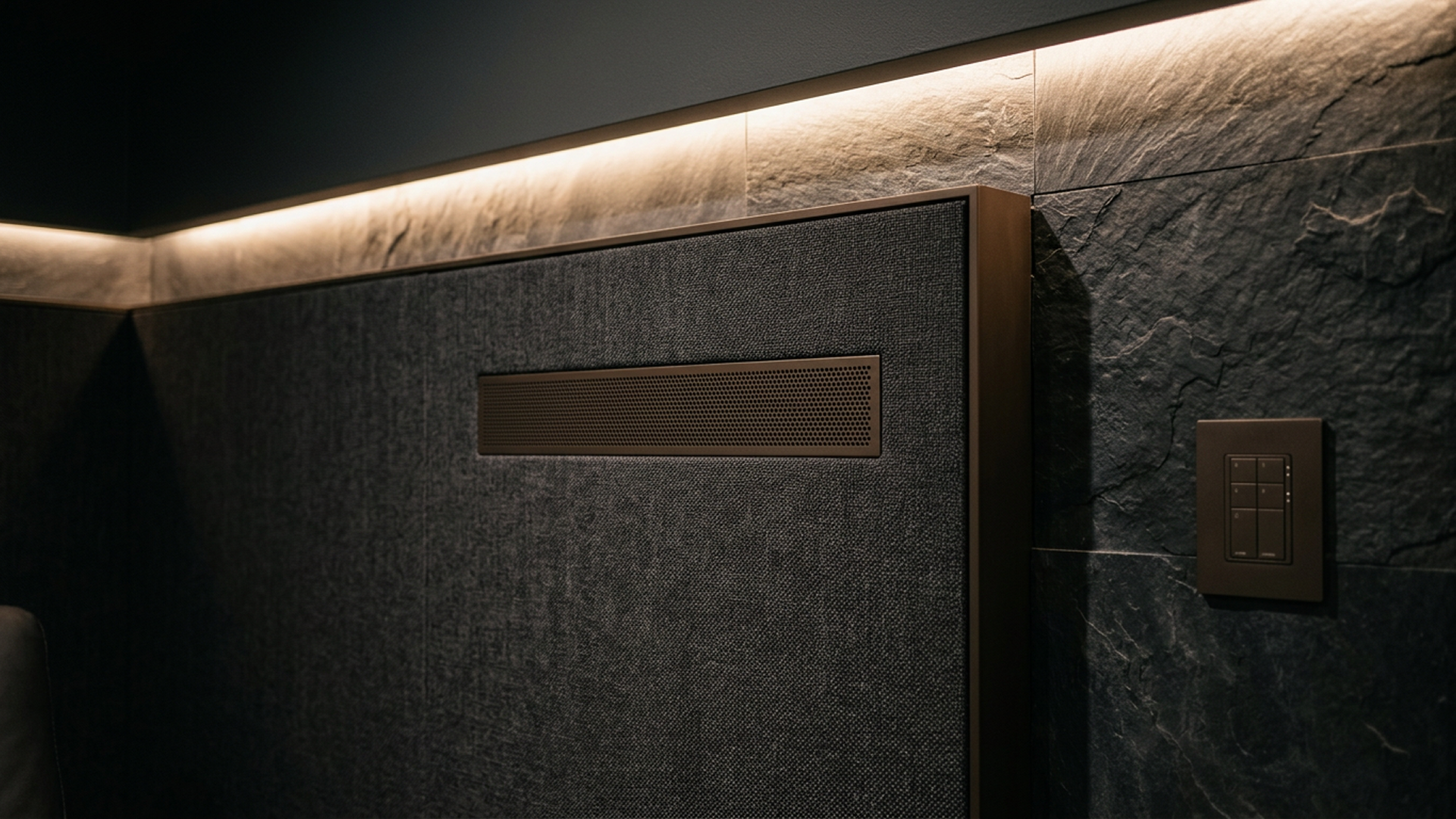
Good acoustic design uses two tools together. Absorption removes reflected energy and shortens reverberation. Diffusion scatters sound in many directions so the room stays lively without producing strong, distinct reflections.
Bass control needs a different approach. Because low frequencies carry so much energy and build up where walls meet, thicker low-frequency absorbers placed in corners are usually required. Thin foam panels do very little below a few hundred hertz.
In our home cinema and hi-fi work, we integrate soundproofing and acoustic treatment into the architecture — inside walls, behind fabric, above ceilings - so the room performs correctly while still looking like part of the design.
Calibration Brings the Final Refinement
Once the room, speakers, and treatment are right, measurement and calibration finish the job. Modern processors and room correction systems measure the actual response at the listening position and apply precise adjustments to level, delay, and frequency balance for each channel.
Calibration is powerful, but it works best as the last step. It can correct residual imbalances; it cannot repair a room with severe reverberation or a badly placed speaker.
Design a Better-Sounding Room With Stereo Types
Our hi-fi systems and acoustic design service focuses on exactly this: speaker placement, room acoustics, and premium components working together so you hear music the way the artist intended. For dedicated cinemas, we handle soundproofing and acoustic treatment alongside 4K projection, Dolby Atmos sound, luxury seating, and smart control.
We are certified in Crestron, Control4, Savant, Lutron, KNX, and Vantage, and we partner with brands including McIntosh, Bowers & Wilkins, Meridian, Sonance, StormAudio, and Sonos. Our teams serve New York and the Northeast, Florida and the Southeast, Virginia and the Mid-Atlantic, as well as Colorado, Utah, and Montana.